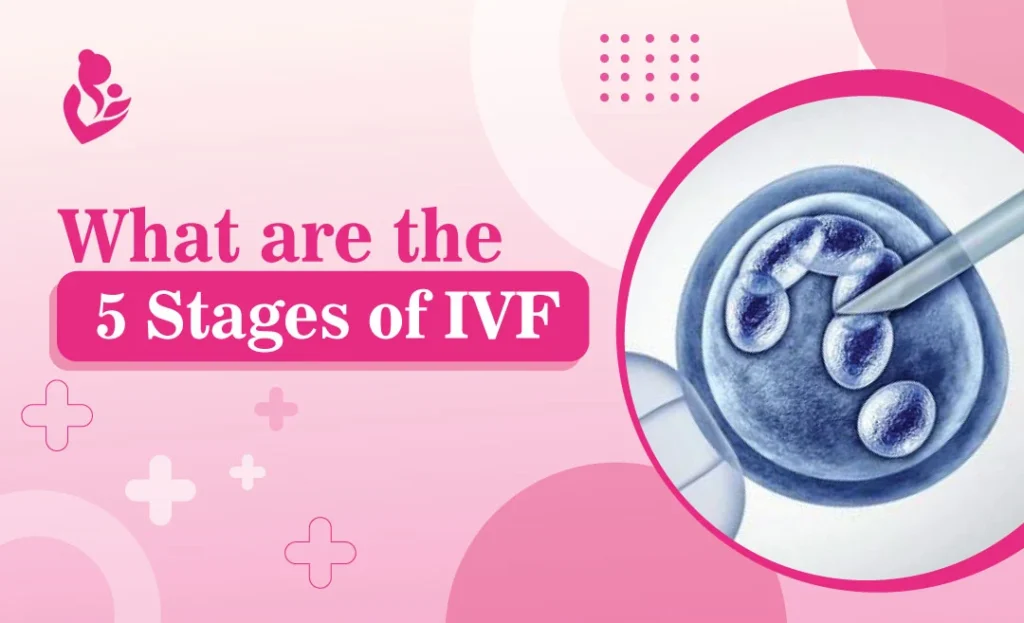
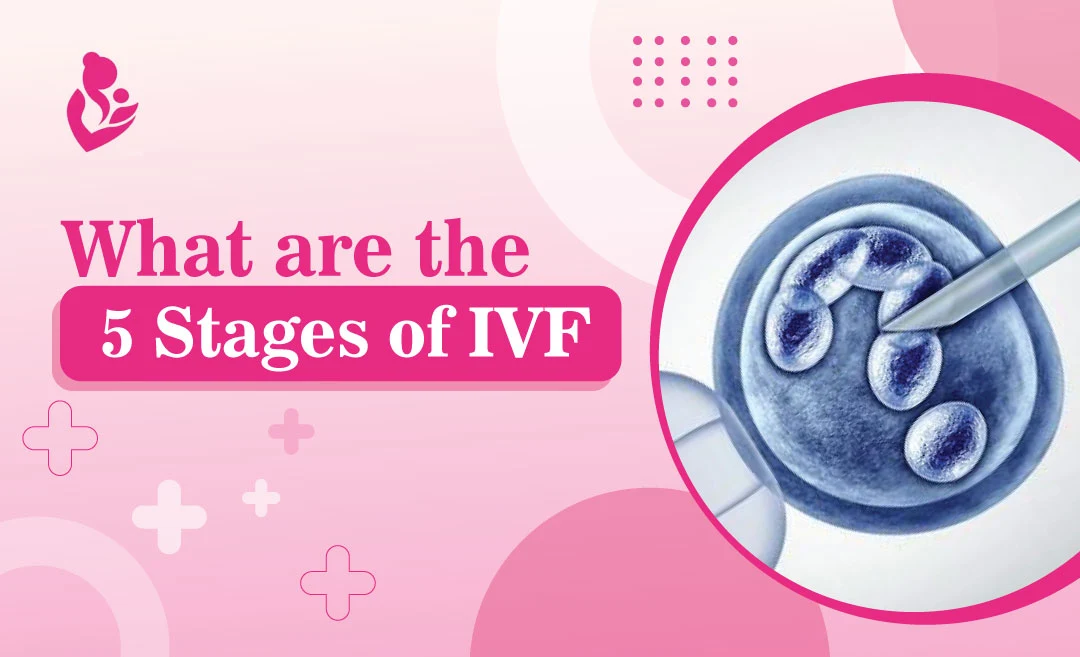
The 5 stages of IVF (In Vitro Fertilization) include ovarian stimulation, egg retrieval, sperm collection and fertilization, embryo culture, and embryo transfer. IVF is one of the most effective assisted reproductive technologies (ART) used to help couples and individuals achieve pregnancy when natural conception is difficult. Each stage is carefully planned and monitored by fertility specialists to maximize the chances of a healthy pregnancy.
In this article, you’ll learn about the 5 stages of IVF, how each step works, how long it takes, and what to expect during the treatment journey.
What Are the 5 Stages of IVF?
The IVF process involves collecting mature eggs from the ovaries, fertilizing them with sperm in a laboratory, and transferring the healthiest embryo into the uterus. The entire treatment cycle usually takes 4 to 6 weeks, although the timeline may vary depending on the patient’s health and fertility condition.
The five stages of IVF are:
- Ovarian Stimulation
- Egg Retrieval
- Sperm Collection and Fertilization
- Embryo Culture
- Embryo Transfer
Stage 1: Ovarian Stimulation
Ovarian stimulation is the first stage of the IVF process, where fertility medications are used to encourage the ovaries to produce multiple mature eggs instead of the single egg released during a natural menstrual cycle. Producing more eggs increases the chances of successful fertilization and the availability of healthy embryos for transfer.
Fertility Medications
- Fertility hormone injections are administered daily for 10 to 14 days to stimulate the growth of multiple ovarian follicles.
- The medications commonly contain Follicle-Stimulating Hormone (FSH) and Luteinizing Hormone (LH) or similar hormones that support egg development.
Monitoring the Ovarian Response
- The patient undergoes regular transvaginal ultrasounds to monitor the number and size of developing follicles.
- Blood tests are performed throughout the stimulation period to measure hormone levels, especially estrogen, and assess the ovaries’ response.
Trigger Injection
- Once the follicles reach the desired size, a trigger injection (hCG or GnRH agonist) is given to complete the final maturation of the eggs before retrieval.
- Egg retrieval is usually scheduled 34 to 36 hours after the trigger injection to collect the mature eggs at the optimal time.
Factors Affecting Egg Production
- The number of eggs produced varies depending on factors such as age, ovarian reserve, and individual response to fertility medications.
- Doctors carefully adjust medication doses during this stage to maximize egg production while reducing the risk of Ovarian Hyperstimulation Syndrome (OHSS).
Possible Side Effects
- Mild side effects such as bloating, abdominal discomfort, breast tenderness, mood changes, and fatigue may occur but are generally temporary.
Stage 2: Egg Retrieval
Egg retrieval is the second stage of the IVF process, during which mature eggs are collected from the ovaries after ovarian stimulation. It is a minor outpatient procedure performed under light sedation to safely retrieve eggs for fertilization in the laboratory.
Before the Procedure
- Egg retrieval is usually scheduled 34 to 36 hours after the trigger injection, before natural ovulation occurs.
- Patients are generally advised to avoid eating or drinking for several hours before the procedure if sedation is planned.
- A final ultrasound assessment may be performed to confirm that the follicles are ready for retrieval.
How Egg Retrieval Is Performed
- The procedure takes about 20 to 30 minutes and is performed under light sedation or short general anesthesia.
- A thin, ultrasound-guided needle is inserted through the vaginal wall into each ovary.
- The needle gently aspirates the follicular fluid, which contains the mature eggs.
- The collected fluid is immediately sent to the embryology laboratory, where specialists identify and isolate the eggs.
After Egg Retrieval
- Patients are monitored for a short time and are usually discharged on the same day.
- Mild cramping, bloating, light spotting, and fatigue are common and usually resolve within 24 to 48 hours.
- Most women can resume normal daily activities within one to two days, as advised by their doctor.
Possible Risks
- Although generally safe, there is a small risk of bleeding, infection, injury to nearby organs, or ovarian hyperstimulation syndrome (OHSS).
- Fertility specialists take every precaution to minimize these risks through careful monitoring and sterile techniques.
Stage 3: Sperm Collection and Fertilization
Sperm collection and fertilization is the third stage of the IVF process, where the sperm and mature eggs are brought together in a specialized laboratory to create embryos. The quality of both the eggs and sperm plays a vital role in successful fertilization and healthy embryo development.
Sperm Collection
- A semen sample is usually collected on the same day as egg retrieval.
- If required, previously frozen sperm or surgically retrieved sperm (such as TESA or PESA) may be used.
- The semen sample is processed in the laboratory to separate the healthiest and most motile sperm for fertilization.
Fertilization Methods
- In Conventional IVF, healthy sperm and mature eggs are placed together in a culture dish, allowing fertilization to occur naturally.
- In Intracytoplasmic Sperm Injection (ICSI), a single healthy sperm is directly injected into a mature egg to improve fertilization chances.
- ICSI is commonly recommended for male infertility, low sperm count, poor sperm motility, abnormal sperm shape, or previous IVF fertilization failure.
Monitoring Fertilization
- Fertilized eggs are carefully observed by embryologists within 16 to 18 hours after fertilization.
- Specialists check for normal fertilization signs, including the presence of two pronuclei, which indicate successful fertilization.
- Eggs that fertilize successfully begin dividing into early-stage embryos.
Factors Affecting Fertilization Success
- Egg quality and maturity significantly influence fertilization outcomes.
- Sperm quality, including count, motility, and morphology, is equally important.
- The age of both partners and underlying fertility conditions can also affect fertilization rates.
Stage 4: Embryo Culture
Embryo culture is the fourth stage of the IVF process, where the fertilized eggs (embryos) are grown in a carefully controlled laboratory environment. During this period, embryologists closely monitor embryo development and select the healthiest embryos for transfer or freezing.
Embryo Development
- After successful fertilization, embryos are placed in special nutrient-rich culture media inside laboratory incubators.
- The incubators maintain optimal temperature, humidity, and carbon dioxide levels, closely mimicking the natural environment of the uterus.
- Embryos continue developing for 3 to 5 days, depending on the treatment plan.
Monitoring Embryo Growth
- Embryologists observe the embryos daily to evaluate cell division, growth rate, and overall quality.
- Healthy embryos should divide at a normal pace and show uniform cell structure with minimal fragmentation.
- Only embryos showing the best developmental potential are selected for transfer.
Blastocyst Formation
- By Day 5 or Day 6, many healthy embryos develop into a blastocyst, which contains hundreds of cells.
- Blastocyst-stage embryos generally have a higher chance of implantation and successful pregnancy than earlier-stage embryos.
- Depending on the patient’s condition, doctors may recommend Day 3 or Day 5 embryo transfer.
Additional Laboratory Procedures
- Embryo grading is performed to assess the quality and implantation potential of each embryo.
- If recommended, Preimplantation Genetic Testing (PGT) may be carried out to screen embryos for certain genetic or chromosomal abnormalities.
- Extra healthy embryos can be cryopreserved (frozen) for future IVF cycles.
Stage 5: Embryo Transfer
Embryo transfer is the final stage of the IVF process, where the healthiest embryo is carefully placed into the uterus with the goal of achieving pregnancy. It is a simple, quick, and usually painless procedure that does not require anesthesia.
Preparing for Embryo Transfer
- The fertility specialist selects the highest-quality embryo based on its development and grading.
- Depending on the treatment plan, fresh or frozen-thawed embryos may be transferred.
- The uterine lining is prepared with hormonal medications, such as progesterone, to improve the chances of implantation.
How the Procedure Is Performed
- Embryo transfer is usually performed on Day 3 or Day 5 after fertilization.
- The procedure takes about 10 to 15 minutes and is performed without surgery.
- A thin, flexible catheter is gently inserted through the cervix to place the embryo into the uterus under ultrasound guidance.
- Most women experience little or no pain and can return home shortly after the procedure.
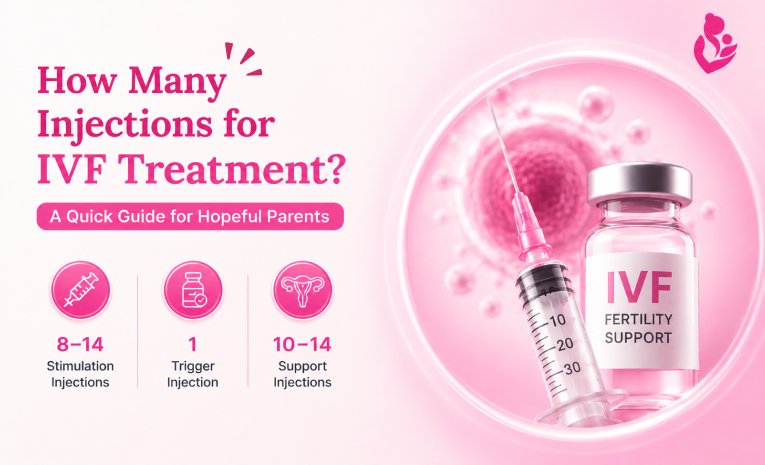
Also Read:- How Many Injections for IVF Treatment?
After Embryo Transfer
- Patients are advised to continue prescribed medications, especially progesterone, to support implantation.
- Normal daily activities can usually be resumed, but heavy exercise and strenuous activities should be avoided for a few days.
- Mild cramping, light spotting, or bloating may occur and are generally temporary.
- A beta-hCG blood test is performed 10 to 14 days after embryo transfer to confirm whether pregnancy has been achieved.
Factors Affecting Implantation Success
- Embryo quality is one of the most important factors influencing implantation.
- A healthy uterine lining (endometrium) improves the likelihood of successful embryo attachment.
- Maternal age, overall reproductive health, and adherence to the doctor’s instructions also play significant roles in IVF success.
How Long Does the Entire IVF Process Take?
The entire IVF process typically takes 4 to 6 weeks from the start of ovarian stimulation to the pregnancy test. Ovarian stimulation usually lasts 10–14 days, followed by egg retrieval, fertilization, embryo culture, and embryo transfer. After the transfer, patients wait 10–14 days before taking a blood test to confirm pregnancy. The exact timeline may vary depending on the individual’s health, treatment plan, and whether fresh or frozen embryos are used.
Also Read:- What is IVF Pregnancy?
Tips to Improve IVF Success
Following a healthy lifestyle and carefully adhering to your fertility specialist’s recommendations can improve the chances of a successful IVF treatment and healthy pregnancy.
- Choose an experienced fertility clinic with a strong success rate and qualified specialists.
- Take fertility medications exactly as prescribed without missing any doses.
- Maintain a healthy body weight, as both underweight and obesity can affect IVF outcomes.
- Eat a balanced diet rich in fruits, vegetables, whole grains, lean protein, and healthy fats.
- Quit smoking, avoid alcohol, and limit caffeine, as these can negatively impact fertility.
- Manage stress through yoga, meditation, deep breathing, or other relaxation techniques.
- Get 7–9 hours of quality sleep each night to support hormonal balance.
- Engage in light to moderate physical activity, but avoid strenuous exercise during treatment.
- Stay well-hydrated and follow your doctor’s dietary recommendations.
- Attend all scheduled ultrasounds, blood tests, and follow-up appointments for proper monitoring.
- Follow your doctor’s advice regarding sexual activity and physical restrictions after embryo transfer.
- Avoid self-medicating and inform your fertility specialist about any supplements or medications you are taking.
What Are the 5 Stages of IVF? FAQs
Q. What are the 5 stages of IVF?
The 5 stages of IVF are ovarian stimulation, egg retrieval, sperm collection and fertilization, embryo culture, and embryo transfer. Each stage is carefully monitored to improve the chances of a successful pregnancy.
Q. How long does the IVF process take?
A complete IVF cycle usually takes 4 to 6 weeks, including ovarian stimulation, egg retrieval, fertilization, embryo development, embryo transfer, and the pregnancy test.
Q. Is IVF painful?
Most IVF procedures involve minimal discomfort. Hormone injections may cause mild soreness, egg retrieval is performed under sedation, and embryo transfer is generally painless.
Q. What is the success rate of IVF?
The success rate of IVF depends on factors such as age, egg and sperm quality, underlying fertility conditions, and embryo quality. Younger women generally have higher success rates than older women.
Q. How many embryos are transferred during IVF?
In most cases, one healthy embryo (single embryo transfer) is recommended to reduce the risk of multiple pregnancies. However, the number of embryos transferred depends on the patient’s age, medical history, and doctor’s recommendation.
Q. Can frozen embryos be used later?
Yes. Frozen embryos can be safely stored through cryopreservation and used in future IVF cycles without repeating ovarian stimulation and egg retrieval.