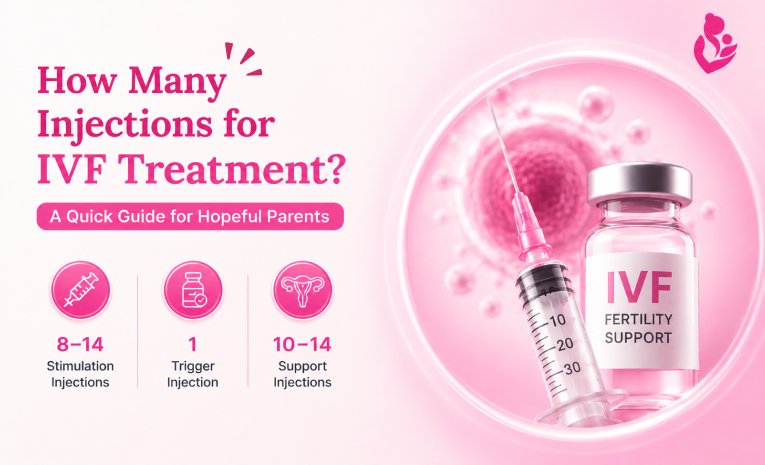
If you’re planning to undergo In Vitro Fertilization (IVF), one of the most common questions is “How many injections are required for IVF treatment?” The answer varies from person to person, but most IVF cycles require between 20 and 40 injections. Depending on your age, ovarian reserve, fertility condition, and treatment protocol, the total number may range from 14 to more than 84 injections.
In this guide, you’ll learn exactly how many injections IVF requires, why they’re needed, whether they are daily, what happens if you miss one, and how many test tube baby specialist in gurugram IVF cycles are considered normal.
How Many Injections Are Needed for IVF Treatment?
A standard IVF treatment cycle generally requires 20–40 injections, although the total can range from 14 to over 84 injections depending on a woman’s age, ovarian reserve, fertility diagnosis, and response to hormone medications. These injections are given over 2–4 weeks and are divided into different stages of the IVF process.
- Average injections per IVF cycle: 20–40
- Possible range: 14 to 84+ injections
- Treatment duration: 2–4 weeks
- Daily injections: Usually 1–2 injections per day
- Main purpose: Stimulate ovaries, prevent premature ovulation, mature eggs, and support implantation.
- Injection count varies based on: Age, ovarian response, IVF protocol, and fertility condition.
|
Injections Needed for IVF Treatment |
|||
| IVF Stage | Duration | Type of Injection | Approximate Number of Injections |
| Ovarian Stimulation | 8–14 days | FSH/HMG | 8–28 |
| Ovulation Prevention | 5–12 days | GnRH Antagonist/Agonist | 5–12 |
| Trigger Shot | 1 day | hCG or Lupron | 1–2 |
| Progesterone Support | 10–14+ days | Progesterone | 10–21+ |
| Total IVF Injections | 2–4 weeks | All Stages Combined | 20–40 (Average) |
Why Are IVF Injections Necessary?
IVF injections are necessary because they help control and support the reproductive process, increasing the chances of a successful pregnancy. These hormone medications stimulate the ovaries to produce multiple mature eggs, prevent premature ovulation, prepare the eggs for retrieval, and support the uterine lining after embryo transfer. By ensuring proper egg development and implantation, IVF injections play a crucial role in improving the overall success rate of IVF treatment.
IVF Injection Schedule: Step-by-Step
The IVF injection schedule is divided into four main stages, each designed to support a specific part of the fertility treatment process. The exact timing and medications may vary depending on the patient’s age, fertility condition, and the IVF protocol recommended by the fertility specialist.
- Ovarian Stimulation Injections (Days 1–14)
Purpose: These injections stimulate the ovaries to produce multiple mature eggs instead of the single egg released during a natural menstrual cycle.
- Duration: Usually 8–14 days
- Common medications: FSH (Follicle-Stimulating Hormone) and HMG (Human Menopausal Gonadotropin)
- Frequency: 1–2 injections daily
- Stimulates the growth of multiple ovarian follicles.
- Increases the number of eggs available for fertilization.
- Regular ultrasounds and blood tests monitor follicle development.
- Medication dosage may be adjusted based on ovarian response.
- This is the longest phase of the IVF injection schedule.
- Ovulation Prevention Injections (GnRH Antagonists/Agonists)
Purpose: These injections prevent the body from releasing eggs too early before the scheduled egg retrieval procedure.
- Duration: Usually 5–12 days, overlapping with ovarian stimulation.
- Common medications: Cetrorelix, Ganirelix, Lupron, or Buserelin
- Frequency: One injection daily or every other day
- Prevents premature ovulation.
- Ensures eggs remain inside the follicles until retrieval.
- Helps synchronize egg maturation.
- Allows doctors to retrieve mature eggs at the optimal time.
- Medication type depends on the IVF protocol being used.
- Trigger Shot
Purpose: The trigger injection completes the final maturation of the eggs and prepares them for egg retrieval.
- Duration: Given on one specific day
- Common medications: hCG Trigger, Lupron Trigger, or Dual Trigger
- Frequency: 1–2 injections
- Administered 34–36 hours before egg retrieval.
- Given at a precise time, often in the evening.
- Helps mature the eggs before collection.
- Proper timing is essential for successful egg retrieval.
- Missing or delaying the trigger shot may affect the IVF cycle.
- Progesterone Support (Luteal Phase)
Purpose: Progesterone injections prepare the uterine lining for embryo implantation and help support early pregnancy.
- Duration: Usually 10–14 days after embryo transfer; sometimes continued until 10–12 weeks of pregnancy if conception occurs.
- Common medication: Progesterone
- Frequency: One injection daily
- Thickens and maintains the uterine lining.
- Supports embryo implantation.
- Helps sustain early pregnancy until the placenta takes over hormone production.
- May be given as an intramuscular injection or, in some cases, replaced with vaginal progesterone depending on the treatment plan.
- Regular follow-up and pregnancy testing determine how long progesterone support continues.
Does IVF Treatment Require Daily Injections?
Yes, IVF treatment usually requires daily injections, especially during the ovarian stimulation and progesterone support phases. Most women receive one or two hormone injections each day for about 8–14 days to stimulate egg development and prevent premature ovulation. After embryo transfer, daily progesterone injections or supplements may continue for several days or weeks to support implantation and early pregnancy.
What Happens If You Stop IVF Injections During Treatment?
Stopping IVF injections during treatment without your fertility specialist’s advice can seriously affect the success of your IVF cycle. Each injection has a specific role in stimulating egg development, preventing premature ovulation, or supporting embryo implantation. Missing or stopping these medications may lead to cycle cancellation or reduce the chances of pregnancy.
Possible Consequences of Stopping IVF Injections
- Poor follicle growth, resulting in fewer mature eggs.
- Premature ovulation, causing eggs to be released before retrieval.
- Egg retrieval may be cancelled if the eggs are no longer available.
- Reduced embryo quality due to improper egg maturation.
- Lower chances of successful implantation after embryo transfer.
- Increased risk of IVF cycle failure, requiring treatment to be restarted.
- Hormonal imbalance, affecting the uterus and embryo development.
- Delays in fertility treatment and additional emotional and financial stress.
How Many Injections for IVF Treatment? FAQs
- How many injections are needed for one IVF cycle?
Most women require 20–40 injections during one IVF cycle. However, the total can range from 14 to more than 84 injections, depending on age, ovarian response, and the treatment protocol.
- Are IVF injections given every day?
Yes, daily injections are common during the ovarian stimulation phase, and progesterone injections may also be required daily after embryo transfer.
- Are IVF injections painful?
Most IVF injections cause only mild discomfort, such as slight pain, redness, bruising, or swelling at the injection site. The discomfort is usually temporary.
- Can I administer IVF injections at home?
Yes. Most IVF injections are designed for self-administration at home after proper guidance from your fertility specialist or nurse.
- Which injection is the most important during IVF?
The trigger shot (hCG or Lupron) is one of the most important injections because it helps the eggs mature and prepares them for retrieval at the correct time.
- What happens if I miss an IVF injection?
Missing an IVF injection can affect your treatment outcome. Contact your fertility specialist immediately for instructions rather than skipping or doubling the next dose.