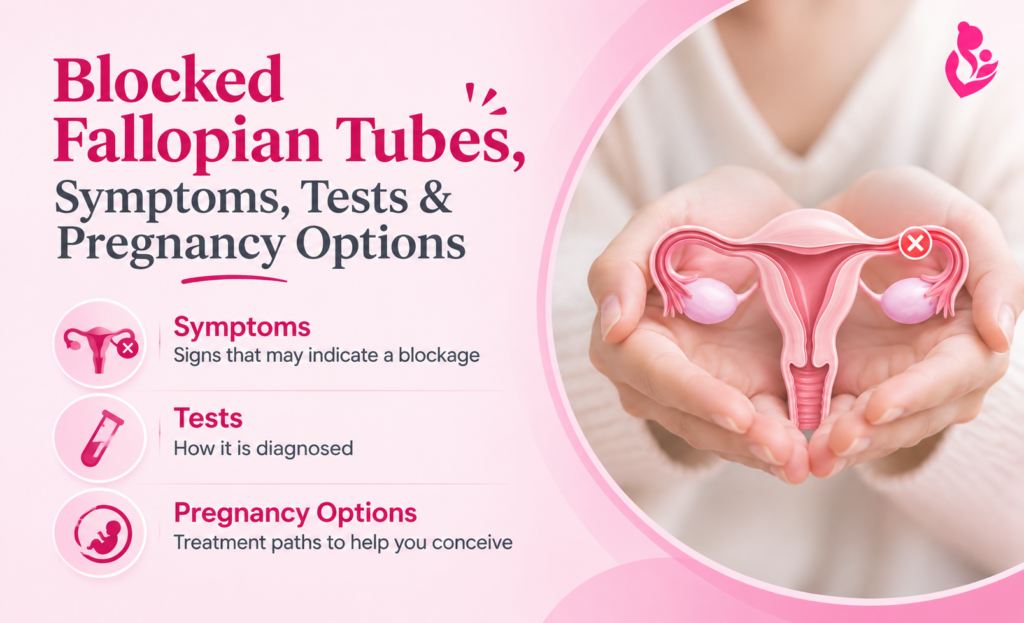
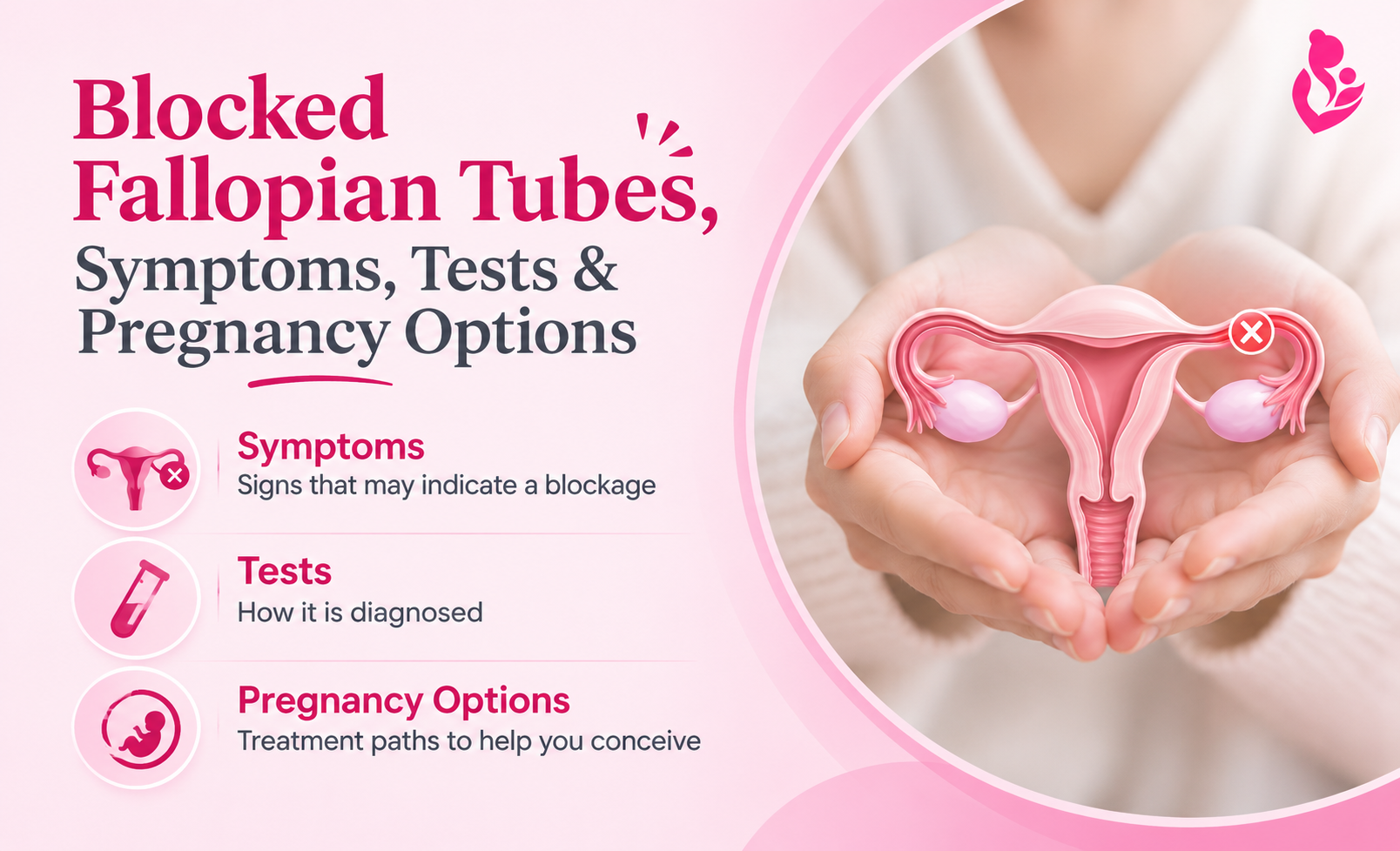
Blocked fallopian tubes are a common cause of female infertility. The fallopian tubes connect the ovaries to the uterus and play an important role in natural conception. They help transport the egg and provide the usual location for fertilisation.
When one or both tubes become blocked or damaged, the egg and sperm may not be able to meet, making pregnancy difficult. However, blocked fallopian tubes do not always mean pregnancy is impossible. Treatment options depend on the location of the blockage, the extent of damage and other fertility factors.
If you are having difficulty conceiving or have been diagnosed with tubal blockage, Dr. Anju Yadav in Gurugram can help assess your fertility health and discuss suitable pregnancy options.
What Are Blocked Fallopian Tubes?
Blocked fallopian tubes occur when one or both tubes become partially or completely obstructed. This can prevent the egg from travelling towards the uterus or stop sperm from reaching the egg.
The fallopian tubes perform three important functions:
- Egg transportation: They collect the egg released from the ovary.
- Fertilisation: They provide the usual location where the egg and sperm meet.
- Embryo transportation: They help move the fertilised egg towards the uterus.
What Causes Blocked Fallopian Tubes?
Fallopian tubes may become blocked due to infections, inflammation, scar tissue or damage to reproductive organs.
Common causes include:
- Pelvic Inflammatory Disease (PID): Infection can cause inflammation and scarring inside the tubes.
- Sexually Transmitted Infections: Untreated chlamydia and gonorrhoea may damage the fallopian tubes.
- Endometriosis: It can cause inflammation and adhesions around the reproductive organs.
- Previous pelvic surgery: Surgical procedures may sometimes lead to scar tissue.
- Ectopic pregnancy: A previous pregnancy inside a fallopian tube may damage it.
- Hydrosalpinx: Fluid accumulation inside a damaged or blocked fallopian tube.
Have a history of pelvic infection, endometriosis or ectopic pregnancy? These factors may affect tubal health. Consult Dr. Anju Yadav for a fertility assessment if you are planning pregnancy.
Symptoms of Blocked Fallopian Tubes
Many women with blocked fallopian tubes do not experience noticeable symptoms. The condition is often discovered during fertility investigations.
Possible symptoms include:
- Difficulty conceiving: Trouble getting pregnant may be the first indication.
- Pelvic pain: Some women experience lower abdominal discomfort.
- Painful periods: This may occur when endometriosis is also present.
- Pain during intercourse: Pelvic inflammation may cause discomfort.
- Unusual vaginal discharge: This may indicate an underlying infection.
Trying to conceive without success? A fertility evaluation can help identify possible causes, including tubal problems. Book a consultation with Dr. Anju Yadav in Gurugram to discuss your concerns.
Types of Fallopian Tube Blockage
The location and extent of the blockage influence treatment options.
- Proximal blockage: Occurs near the point where the fallopian tube connects to the uterus. Selected cases may be suitable for tubal cannulation.
- Distal blockage: Occurs near the outer end of the tube, close to the ovary. It may be associated with infection or hydrosalpinx.
- Partial blockage: The tube is narrowed or damaged but not completely obstructed. Pregnancy may still occur, although ectopic pregnancy risk can be higher.
- Complete blockage: The tube is fully obstructed. If both tubes are completely blocked, natural conception is generally not possible.
How Are Blocked Fallopian Tubes Diagnosed?
A fertility specialist may recommend different tests to check whether the fallopian tubes are open.
- Hysterosalpingography (HSG)
HSG is an X-ray procedure used to examine the uterus and fallopian tubes.
- A contrast dye is introduced through the cervix.
- X-ray images track the movement of the dye.
- If the dye passes through the tubes, they are generally considered open.
- Failure of the dye to pass may indicate a blockage.
- Hysterosalpingo-Contrast Sonography (HyCoSy)
HyCoSy is an ultrasound-based test used to assess tubal patency.
- A special fluid or contrast agent is introduced into the uterus.
- Ultrasound is used to observe its movement through the tubes.
- It does not involve X-ray radiation.
- Transvaginal Ultrasound
This ultrasound examines the uterus, ovaries and surrounding pelvic structures. It may identify hydrosalpinx, ovarian cysts and other abnormalities, but cannot confirm every type of tubal blockage.
- Laparoscopy with Chromopertubation
This surgical procedure allows the doctor to examine the reproductive organs and check whether dye passes through the fallopian tubes. It may also help identify adhesions and endometriosis.
Unsure which fertility test you need? Your medical history and symptoms help determine the appropriate investigation. Consult Dr. Anju Yadav for guidance on fertility testing.
Can You Get Pregnant with Blocked Fallopian Tubes?
Pregnancy may still be possible depending on whether one or both tubes are affected.
- One Blocked Fallopian Tube
Natural pregnancy may be possible if the other tube is healthy and functioning. The chances also depend on ovulation, age and sperm health.
- Both Fallopian Tubes Blocked
If both tubes are completely blocked, natural conception is generally not possible through the usual route. IVF may be an option because fertilisation takes place outside the body.
- Partially Blocked Fallopian Tubes
Some women with partial blockage may conceive naturally. However, damaged tubes may not transport the embryo properly, increasing the risk of ectopic pregnancy.
Diagnosed with tubal blockage? Your pregnancy options depend on the extent of damage and your overall fertility health. Schedule a consultation with Dr. Anju Yadav in Gurugram to discuss your next steps.
Treatment Options for Blocked Fallopian Tubes
Treatment depends on the location of the blockage, tubal damage, age, ovarian reserve and other fertility factors.
- Tubal Cannulation
This procedure may be used for selected cases of proximal blockage.
- A thin catheter is guided through the cervix towards the blocked area.
- The doctor attempts to restore passage through the tube.
- It is not suitable for every type of tubal damage.
- Laparoscopic Tubal Surgery
Selected patients may undergo surgery to address adhesions or repair certain types of tubal damage. The suitability of surgery depends on the condition of the tubes.
- Treatment for Hydrosalpinx
Hydrosalpinx refers to fluid accumulation inside a blocked fallopian tube. Before IVF, a doctor may recommend:
- Salpingectomy: Surgical removal of the affected tube.
- Tubal occlusion: Blocking the affected tube to prevent fluid from entering the uterus.
- In Vitro Fertilisation (IVF)
IVF is an important pregnancy option for women with severely damaged or completely blocked fallopian tubes.
The process generally involves:
- Ovarian stimulation: Medicines help the ovaries produce multiple eggs.
- Egg retrieval: Mature eggs are collected.
- Fertilisation: Eggs and sperm are combined in a laboratory.
- Embryo development: Fertilised eggs are monitored as they develop.
- Embryo transfer: A selected embryo is placed inside the uterus.
- Pregnancy testing: A blood test checks whether pregnancy has occurred.
Considering IVF for blocked fallopian tubes? A personalised assessment can help determine whether IVF or tubal surgery is suitable. Consult Dr. Anju Yadav to discuss your fertility treatment options.
IVF vs Tubal Surgery: Which Is Suitable?
| Factor | Tubal Surgery | IVF |
| Purpose | Attempts to repair selected tubal damage | Enables fertilisation outside the body |
| Suitable cases | Selected mild or moderate tubal disease | Severe damage or bilateral blockage |
| Natural conception | May become possible if tubal function is restored | Not required for fertilisation |
| Important consideration | Ectopic pregnancy risk may increase | Requires fertility medicines and embryo transfer |
The choice depends on the severity of tubal damage, age, ovarian reserve and other fertility factors. There is no single treatment suitable for everyone.
Can Blocked Fallopian Tubes Be Prevented?
Not all causes of tubal blockage can be prevented, but certain steps may reduce the risk of infection and reproductive damage.
- Treat infections early: Seek medical care for suspected pelvic or sexually transmitted infections.
- Practise safer sex: Condoms and appropriate STI testing can reduce infection risk.
- Attend regular check-ups: Discuss persistent pelvic pain or unusual discharge with a doctor.
- Do not ignore symptoms: Early evaluation may help prevent complications.
- Seek timely fertility advice: Discuss testing if you have difficulty conceiving.
When Should You Consult a Fertility Specialist?
Consider a fertility consultation if:
- You have been trying to conceive without success.
- You have a history of pelvic infection or endometriosis.
- You have experienced an ectopic pregnancy.
- You have undergone pelvic or abdominal surgery.
- Your HSG or ultrasound suggests tubal blockage.
- You experience persistent pelvic pain.
Blocked Fallopian Tube Treatment with Dr. Anju Yadav in Gurugram
Blocked fallopian tubes can affect natural conception, but the right diagnosis can help identify suitable treatment and pregnancy options.
Dr. Anju Yadav, a fertility specialist in Gurugram, provides care for infertility and IVF-related concerns. Women with suspected tubal blockage can discuss:
- Previous HSG, HyCoSy and ultrasound reports.
- History of infections, endometriosis or ectopic pregnancy.
- Ovarian reserve and other fertility factors.
- Suitability for tubal surgery or IVF.
- Pregnancy planning and follow-up.
Looking for guidance on blocked fallopian tubes? Book a consultation with Dr. Anju Yadav in Gurugram to discuss your reports and available pregnancy options.
Visit Dr. Anju Yadav’s official website to learn more.
Frequently Asked Questions (FAQs)
- Can I get pregnant naturally with blocked fallopian tubes?
Yes, natural pregnancy may be possible if one tube is blocked and the other is healthy. Complete blockage of both tubes generally prevents natural conception.
- What are the first signs of blocked fallopian tubes?
Many women have no symptoms. Difficulty conceiving may be the first indication. Some may experience pelvic pain or symptoms of an underlying infection.
- Which test confirms blocked fallopian tubes?
HSG and HyCoSy are commonly used to assess whether the tubes are open. Laparoscopy with chromopertubation may be recommended in selected cases.
- Can medicines unblock fallopian tubes?
Medicines can treat certain infections but generally cannot remove established scar tissue or repair structural damage.
- Can blocked fallopian tubes open naturally?
Temporary factors may sometimes cause an apparent blockage, but established scarring generally does not resolve naturally.
- Can IVF help if both tubes are blocked?
Yes. IVF allows fertilisation to take place outside the body and transfers the resulting embryo into the uterus, bypassing the fallopian tubes.
- Is surgery necessary for blocked fallopian tubes?
No. Some patients may be suitable for selected surgical procedures, while others may benefit more from IVF.
- What is hydrosalpinx?
Hydrosalpinx occurs when a blocked fallopian tube fills with fluid. It can affect fertility and may reduce IVF success in some patients.
Read More: How to Get Pregnant with Irregular Periods