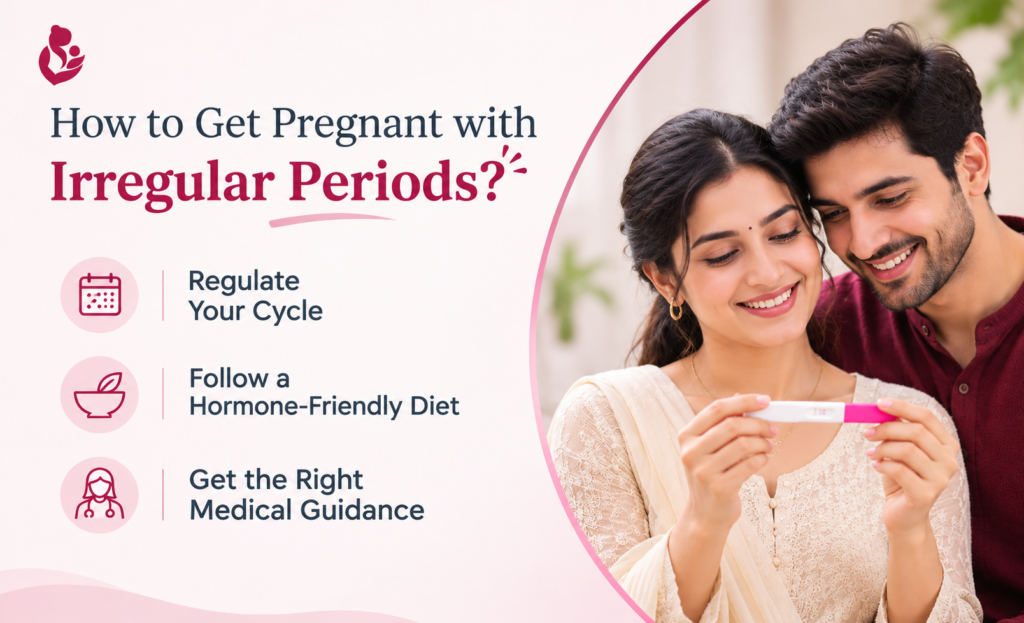
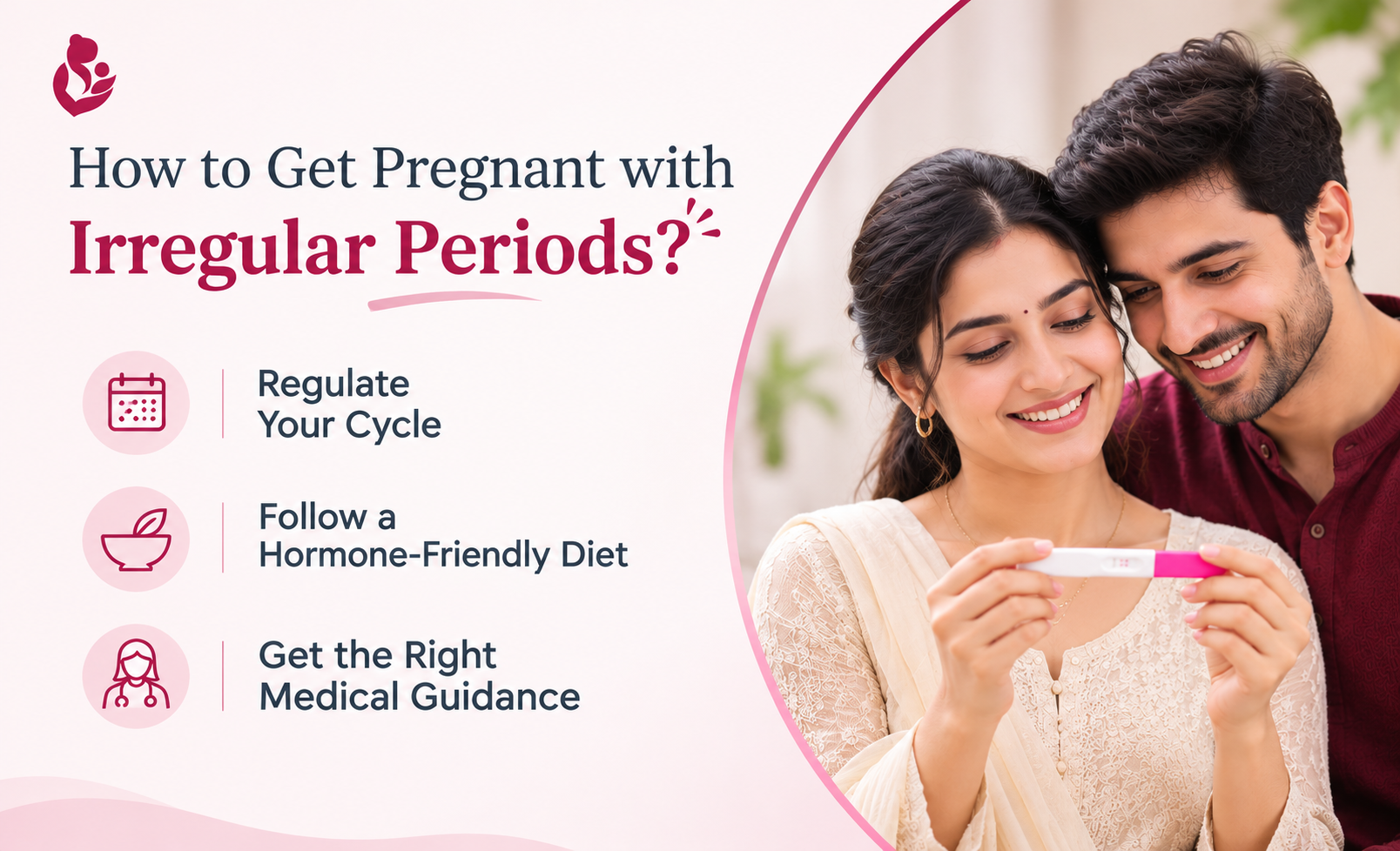
Getting pregnant with irregular periods can be challenging because ovulation may not occur regularly or may be difficult to predict. However, irregular periods do not mean that pregnancy is impossible. Many women conceive naturally or with appropriate fertility treatment.
Conditions such as PCOS, thyroid disorders, hormonal imbalances, and weight changes can affect ovulation and menstrual cycles. Identifying the underlying cause and seeking timely medical guidance can improve the chances of conception.
Can You Get Pregnant with Irregular Periods?
Yes, pregnancy is possible with irregular periods if ovulation occurs. However, irregular cycles can make it difficult to identify the fertile window.
Women with irregular periods may experience:
- Delayed or unpredictable ovulation.
- Missed menstrual cycles.
- Cycles without ovulation.
- Difficulty identifying the best days for conception.
A fertility assessment can help determine whether ovulation is occurring and identify possible reasons for irregular periods.
Causes of Irregular Periods and Difficulty Getting Pregnant
Several conditions can affect menstrual regularity and fertility.
1. Polycystic Ovary Syndrome (PCOS)
PCOS is a common cause of irregular periods and ovulation problems. It may cause missed periods, acne, excessive facial hair, and difficulty conceiving.
2. Thyroid Disorders
Both hypothyroidism and hyperthyroidism can affect hormonal balance, menstrual cycles, and ovulation.
3. Hormonal Imbalance
Changes in hormones such as prolactin, FSH, and LH may interfere with egg development and ovulation.
4. Weight Changes
Being significantly underweight or overweight, rapid weight changes, and excessive exercise may affect reproductive hormones.
5. Stress and Lifestyle Factors
Chronic stress, inadequate sleep, and poor nutritional habits may contribute to menstrual irregularities.
6. Other Reproductive Conditions
Conditions such as endometriosis and premature ovarian insufficiency may affect menstrual patterns and fertility.
Having irregular periods and difficulty conceiving? Consult Dr. Anju Yadav, Senior Fertility Specialist in Gurugram, for an evaluation of your menstrual cycle, ovulation, and reproductive health.
How to Get Pregnant with Irregular Periods?
The right approach depends on the underlying cause. These steps may help improve the chances of conception:
1. Track Your Menstrual Cycle
Record the first day of each period, cycle length, and changes in bleeding. This information can help your doctor understand your menstrual pattern.
2. Identify Your Ovulation Period
Ovulation is the release of an egg from the ovary. The fertile window includes the five days before ovulation and the day of ovulation.
You can identify ovulation through:
- Ovulation predictor kits: Detect a rise in LH before ovulation.
- Cervical mucus changes: Clear, slippery mucus may indicate approaching ovulation.
- Basal body temperature: A slight rise can help identify ovulation retrospectively.
- Ultrasound monitoring: Helps assess follicular growth and ovulation.
Calendar-based predictions may be less reliable when periods are irregular.
3. Maintain a Healthy Weight
Maintaining a healthy weight through balanced nutrition and regular physical activity may support hormonal health and ovulation.
4. Follow a Balanced Diet
Include fruits, vegetables, whole grains, protein-rich foods, nuts, and healthy fats. Discuss folic acid supplements with your doctor when planning pregnancy.
5. Manage Stress and Sleep
Maintain a regular sleep schedule and practise relaxation techniques. Moderate physical activity may also support overall health.
6. Have Regular Intercourse
When ovulation is unpredictable, having intercourse every two to three days throughout the cycle can help cover the fertile window.
7. Seek Medical Guidance
If your periods are consistently irregular or absent, consult a gynaecologist or fertility specialist. Early evaluation can help identify ovulation problems and other fertility concerns.
Need help identifying your fertile window? Dr. Anju Yadav can assess possible causes of irregular periods and guide you on suitable fertility investigations and treatment options.
Tests to Identify the Cause of Irregular Periods
A fertility specialist may recommend the following tests based on your symptoms and medical history:
- Pelvic ultrasound: Evaluates the uterus and ovaries.
- Thyroid function tests: Identify thyroid-related problems.
- Prolactin test: Checks elevated prolactin levels.
- Hormonal tests: May include FSH, LH, and other relevant hormone assessments.
- Blood sugar tests: Help assess diabetes or insulin resistance.
- Progesterone testing: May help confirm whether ovulation has occurred.
- Semen analysis: Evaluates male fertility.
- HSG: Checks whether the fallopian tubes are open.
Treatment Options to Get Pregnant with Irregular Periods
The treatment for irregular periods and infertility depends on the underlying cause.
1. Lifestyle Management
Healthy eating, regular exercise, and gradual weight management may help improve ovulation in some women.
2. Ovulation Induction Medicines
Medicines such as letrozole may be prescribed to stimulate ovulation, particularly in women with PCOS-related ovulation problems. Treatment requires medical supervision.
3. Treatment for Hormonal Disorders
Thyroid disorders and elevated prolactin levels may require specific treatment to support menstrual regularity and ovulation.
4. Intrauterine Insemination (IUI)
IUI treatment involves placing prepared sperm directly into the uterus around ovulation. It may be suitable for selected couples after fertility assessment.
5. In Vitro Fertilisation (IVF)
IVF treatment may be recommended when other treatments are unsuitable or unsuccessful, or when additional fertility factors are present.
Not every woman with irregular periods needs IVF. Treatment is selected according to the cause of infertility and the couple’s reproductive health.
When Should You Consult a Fertility Specialist?
Consider consulting a doctor if:
- Your periods are consistently irregular or absent.
- You miss periods for several months.
- You experience unexplained weight changes or excessive facial hair.
- You have been trying to conceive without success.
- You have PCOS, thyroid disorders, or endometriosis.
Women with irregular or absent periods should seek fertility evaluation earlier rather than waiting for the usual infertility assessment period.
Fertility Consultation with Dr. Anju Yadav in Gurugram
Getting pregnant with irregular periods starts with identifying the reason behind unpredictable menstrual cycles and ovulation.
Dr. Anju Yadav, Senior Fertility Specialist and Endoscopic Surgeon, has over 17 years of experience in reproductive medicine and women’s healthcare. Her areas of expertise include:
- Female and male infertility
- PCOS-related fertility concerns
- Ovulation assessment and induction
- IUI treatment
- IVF and IVF-ICSI
- Endometriosis management
- Laparoscopy and hysteroscopy
- Fertility preservation
Women experiencing irregular periods or difficulty conceiving can consult Dr. Anju Yadav for personalised fertility evaluation and treatment guidance.
Book a consultation with Dr. Anju Yadav in Gurugram to discuss your menstrual health, ovulation, and pregnancy planning.
Frequently Asked Questions (FAQs)
1. Can I get pregnant naturally with irregular periods?
Yes. Pregnancy is possible if ovulation occurs. However, irregular ovulation can make it difficult to predict the fertile window.
2. What is the fastest way to get pregnant with irregular periods?
Identify the cause of irregular periods, assess ovulation, and follow a fertility specialist’s advice. There is no guaranteed method for quick conception.
3. Can I get pregnant with PCOS and irregular periods?
Yes. Many women with PCOS conceive naturally or with treatment such as lifestyle management and ovulation induction medicines.
4. How can I know if I am ovulating?
Ovulation can be assessed through ultrasound monitoring, appropriately timed progesterone testing, and other methods recommended by a fertility specialist.
5. Which medicine helps with pregnancy when periods are irregular?
Letrozole may be prescribed to stimulate ovulation, particularly in women with PCOS-related anovulatory infertility. Medicines should only be taken under medical supervision.
6. Can irregular periods cause infertility?
Irregular periods do not automatically mean infertility. However, they may indicate irregular or absent ovulation, which can make conception difficult.
7. How often should I have intercourse with irregular periods?
Having intercourse every two to three days throughout the menstrual cycle can help cover the fertile window.
8. Does every woman with irregular periods need IVF?
No. Depending on the cause, treatment may involve lifestyle changes, ovulation medicines, IUI, or IVF.
Read More: Why Is IVF Failing? 10 Possible Reasons and Next Steps