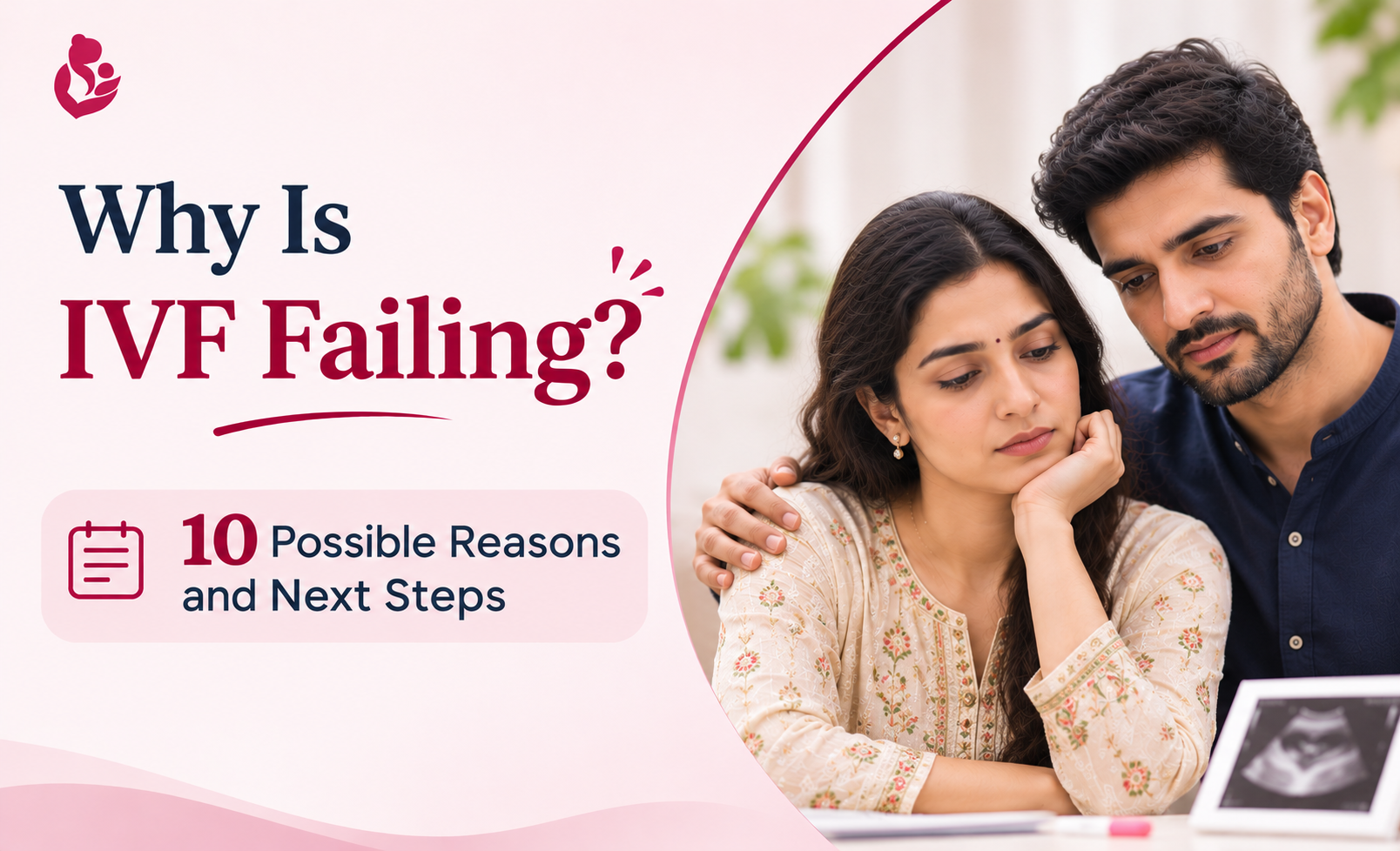
An unsuccessful IVF cycle can be emotionally and physically challenging for couples trying to conceive. Despite undergoing fertility treatment, pregnancy may not occur because of factors affecting egg quality, sperm health, embryo development, or implantation.
However, IVF failure does not mean pregnancy is impossible. Understanding the possible reasons behind an unsuccessful cycle can help a fertility specialist plan the next steps and make suitable changes to the treatment approach.
What Does IVF Failure Mean?
IVF failure refers to an IVF cycle that does not result in pregnancy. It may happen at different stages of treatment, including:
- Poor ovarian response: The ovaries produce fewer eggs than expected.
- Failed fertilisation: The eggs do not fertilise successfully.
- Poor embryo development: Embryos do not develop sufficiently for transfer.
- Failed implantation: The transferred embryo does not implant.
- Pregnancy loss: Pregnancy begins but does not continue.
Why Is IVF Failing? 10 Possible Reasons
Several factors can affect the outcome of IVF treatment. The common reasons for IVF failure include:
- Poor Egg Quality
Egg quality plays an important role in fertilisation and embryo development. Maternal age and certain ovarian conditions may affect egg quality and increase the chances of chromosomal abnormalities.
- Poor Sperm Quality
Low sperm count, poor motility, abnormal morphology, and sperm DNA damage may affect fertilisation and embryo development.
- Embryo Chromosomal Abnormalities
Some embryos have an abnormal number of chromosomes, which may affect their ability to implant or develop into a healthy pregnancy. The likelihood of these abnormalities generally increases with maternal age.
- Uterine Abnormalities
Conditions such as uterine fibroids affecting the cavity, polyps, adhesions, and certain congenital abnormalities may interfere with implantation.
- Endometrial Receptivity Issues
The endometrium (uterine lining) needs to be appropriately developed for implantation. Hormonal disturbances and certain uterine conditions may affect the implantation environment.
- Hormonal Imbalances
Thyroid disorders, elevated prolactin, and problems with progesterone levels or timing may affect reproductive health and IVF outcomes.
- Poor Ovarian Response
Some women do not respond as expected to ovarian stimulation medicines. This may result in fewer eggs being retrieved and fewer embryos being available for transfer.
- Embryo Transfer-Related Factors
Technical difficulties during embryo transfer or uterine conditions may influence the procedure. However, even a technically successful transfer cannot guarantee implantation.
- Lifestyle and Medical Conditions
Smoking, tobacco use, excessive alcohol consumption, significant weight-related concerns, and poorly controlled medical conditions may affect fertility and pregnancy outcomes.
- Unexplained IVF Failure
Sometimes, IVF does not result in pregnancy even when routine investigations do not identify a clear cause. Fertility involves several biological processes, and not every unsuccessful cycle can be explained.
Experienced an unsuccessful IVF cycle? A review of your previous treatment, embryo development, and reproductive health can help identify possible factors affecting the outcome. Consult Dr. Anju Yadav, Senior Fertility Specialist in Gurugram, for personalised fertility guidance.
What Happens After IVF Failure?
After an unsuccessful IVF cycle, the fertility specialist reviews the treatment details to understand what may have affected the outcome.
The evaluation may include:
- Number and maturity of eggs retrieved.
- Fertilisation rate and embryo development.
- Embryo quality and availability of frozen embryos.
- Uterine health and endometrial thickness.
- Hormonal levels and progesterone timing.
- Sperm quality and relevant male fertility factors.
- Previous medical and fertility history.
Based on these findings, the doctor may recommend additional tests, changes to the treatment protocol, or another fertility approach.
What Are the Next Steps After Failed IVF?
The next treatment plan depends on the woman’s age, ovarian reserve, embryo availability, medical history, and possible reasons for the previous failure.
- Review the Previous IVF Cycle: Discuss the stimulation protocol, egg retrieval, fertilisation, embryo development, and transfer details with your fertility specialist.
- Consider Additional Investigations: Tests may include AMH, antral follicle count, thyroid function, prolactin, semen analysis, and uterine evaluation through ultrasound or hysteroscopy, depending on the clinical findings.
- Modify the IVF Protocol: The doctor may adjust stimulation medicines, dosage, monitoring, or embryo transfer planning based on the previous cycle.
- Consider Frozen Embryo Transfer: If suitable frozen embryos are available, a frozen embryo transfer (FET) may be considered without repeating ovarian stimulation and egg retrieval.
- Explore Other Fertility Options: Depending on the diagnosis, options may include IVF-ICSI, donor eggs, or other appropriate treatments.
- Prepare for Another Cycle: Follow medical advice regarding nutrition, prescribed supplements, lifestyle changes, and management of existing health conditions.
Not every patient needs additional testing or a different treatment. The next step should be based on an individual assessment.
Planning another IVF attempt? Dr. Anju Yadav can review your previous IVF reports and help determine whether further evaluation or changes to the treatment plan may be appropriate.
How Long Should You Wait Before Trying IVF Again?
There is no fixed waiting period after an unsuccessful IVF cycle. The timing depends on:
- Physical recovery after egg retrieval or pregnancy loss.
- Hormonal levels and menstrual cycle.
- Availability of frozen embryos.
- Age and ovarian reserve.
- Reason for the previous IVF failure.
- Additional investigations or treatment required.
Some women may proceed with a frozen embryo transfer in a subsequent cycle, while others may need more time before another stimulation cycle.
Your fertility specialist can recommend the appropriate timing.
Can IVF Be Successful After Multiple Failed Attempts?
Yes, pregnancy is possible after multiple unsuccessful IVF cycles. The chances depend on factors such as maternal age, egg and sperm quality, embryo development, uterine health, and the underlying cause of infertility.
Reviewing previous treatment cycles may help identify factors that can be addressed before another attempt. However, repeating IVF does not guarantee success, and treatment decisions should be based on individual prognosis.
When Should You Consult a Fertility Specialist?
Consider consulting a fertility specialist if:
- Your IVF cycle did not result in pregnancy.
- Embryos repeatedly fail to develop.
- Fertilisation rates are consistently low.
- You have experienced repeated implantation failure.
- You have had multiple pregnancy losses.
- You are planning another IVF cycle and want to review your options.
A timely consultation can help you understand possible reasons for unsuccessful treatment and make informed decisions about the next steps.
IVF Consultation with Dr. Anju Yadav in Gurugram
An unsuccessful IVF cycle can raise several questions about fertility and future treatment. Understanding the possible reasons behind the outcome is an important step towards planning another attempt.
Dr. Anju Yadav, Senior Fertility Specialist and Endoscopic Surgeon, has over 17 years of experience in IVF treatment and women’s reproductive health. She holds MBBS and MS qualifications and fellowships in Reproductive Medicine and Gynaec Endoscopy.
Her areas of expertise include:
- IVF and IVF-ICSI
- Female and male infertility management
- Fertility assessment
- IUI treatment
- PCOS-related fertility concerns
- Endometriosis management
- Laparoscopy and hysteroscopy
- Fertility preservation
Couples experiencing unsuccessful IVF cycles can consult Dr. Anju Yadav for a review of previous treatment, further evaluation, and personalised fertility guidance.
Book a fertility consultation with Dr. Anju Yadav in Gurugram to discuss your previous IVF experience and understand the available treatment options.
Frequently Asked Questions (FAQs)
1. Why does IVF fail even with good-quality embryos?
Even good-quality embryos may not implant. Chromosomal abnormalities, uterine conditions, and other biological factors may influence implantation and pregnancy outcomes.
2. Does failed IVF mean I cannot get pregnant?
No. An unsuccessful IVF cycle does not mean pregnancy is impossible. Future outcomes depend on age, fertility health, embryo quality, and other individual factors.
3. What is the most common reason for IVF failure?
There is no single reason for every patient. Embryo-related factors, including chromosomal abnormalities, are important contributors. Egg quality, sperm health, and uterine conditions may also affect outcomes.
4. How many IVF attempts are usually needed?
The number of attempts varies between couples. Some achieve pregnancy in the first cycle, while others may need additional attempts depending on their fertility condition and treatment response.
5. Can poor egg quality cause IVF failure?
Yes. Poor egg quality may affect fertilisation, embryo development, and chromosomal health. Maternal age and ovarian conditions can influence egg quality.
6. Can stress cause IVF failure?
Stress can affect emotional well-being during fertility treatment, but there is no reliable evidence that stress alone directly causes IVF failure. Emotional support can help couples manage the treatment process.
7. When can I try IVF again after a failed cycle?
The timing depends on physical recovery, hormonal health, available embryos, and the reason for the unsuccessful cycle. Your fertility specialist can advise when to proceed.
8. Is frozen embryo transfer better after failed IVF?
Frozen embryo transfer may be suitable in certain situations, but it is not automatically better for everyone. The decision depends on embryo availability, uterine health, and individual treatment needs.
9. Can IVF fail because of uterine problems?
Yes. Uterine polyps, cavity-distorting fibroids, adhesions, and certain endometrial conditions may affect implantation. Appropriate investigations can help identify these problems.
10. What should I do after failed IVF?
Review your previous IVF reports with a fertility specialist, understand the possible reasons for failure, and discuss whether additional investigations or changes to the treatment plan are needed.
Read More: Best IVF Doctor in Gurgaon: How to Choose the Right Specialist