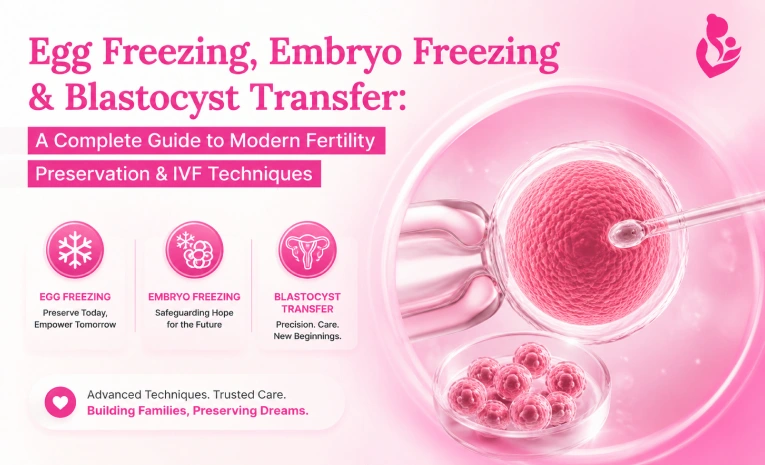
Your doctor said freeze your eggs. You nodded. You left with a pamphlet and more confusion than before. Egg freezing. Embryo freezing. Blastocyst transfer. Three terms that sound similar, mean completely different things, and are almost never explained properly to the patient sitting in the chair.
That ends here. Understanding what is being done to your eggs, your embryos, and your body is not optional. It is the foundation of every right decision.
What Each Option Actually Means and Who It Is For
Egg freezing is for women not yet ready to conceive but wanting to protect their egg quality right now. Ovaries are stimulated with hormonal injections for ten to twelve days. Mature eggs are retrieved under sedation and frozen using vitrification, stored in liquid nitrogen at minus 196 degrees Celsius. No sperm. No embryo. The eggs simply wait. This suits women delaying pregnancy due to career, marriage, or personal reasons, and critically, women about to undergo chemotherapy or radiation that could permanently damage fertility. The biological clock does not stop. Egg freezing and embryo freezing in Gurgaon are now accessible options that give you real control over that timeline.
Embryo freezing is different. Eggs are fertilised with sperm in the lab, creating embryos, which are then frozen rather than transferred immediately. This happens most commonly after an IVF cycle where more embryos are created than can be transferred in one go. Extra embryos are stored for future use. If the first transfer fails, or the couple wants a second child later, those embryos are used without repeating the full stimulation and retrieval process. Lower cost. Less physical demand. Embryo survival with modern vitrification touches 95 percent, making this one of the most reliable tools in fertility medicine today.
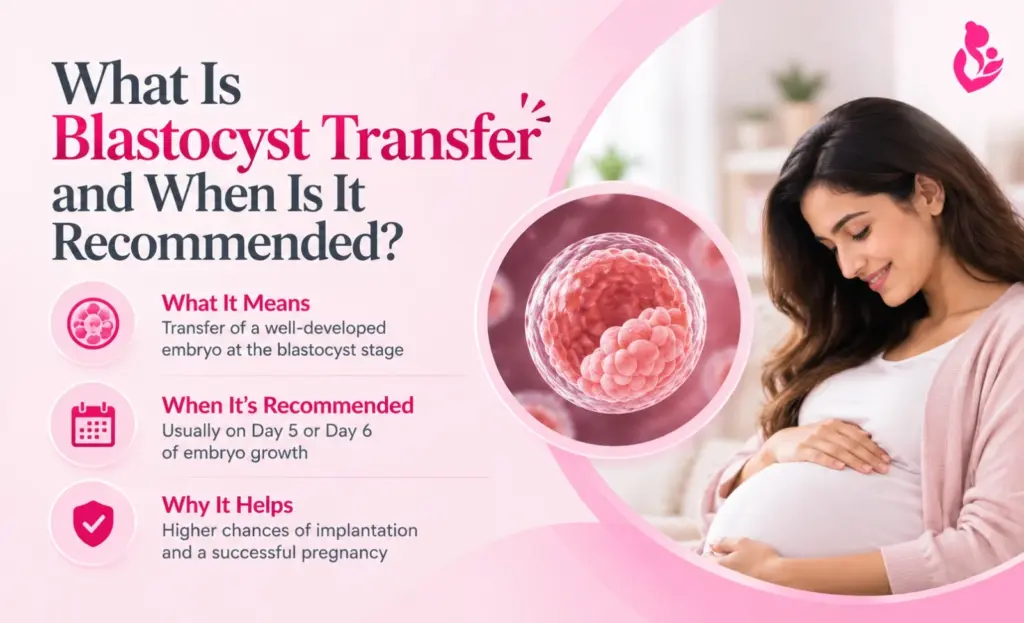
Blastocyst transfer is about timing. After fertilisation, embryos can be transferred on Day 3 or developed further in the lab until Day 5, reaching the blastocyst stage, around 100 to 200 cells with two distinct structures. Outer cells become the placenta. Inner cells become the baby. Day 5 transfer means a stronger embryo, better matched to the natural timing of implantation. Not every embryo reaches Day 5 in the lab. This is not failure. It is nature selecting. An embryo that cannot reach blastocyst stage would likely not have implanted anyway.
Where Fertility Preservation Goes Wrong — Diagnosis and Planning
No one tells you about this part.
The most common mistake is not in the procedure. It is still in the planning stage before it. What we see often in consultation is women who came for egg freezing and embryo freezing in Gurgaon at 38 or 39, when egg quality had already declined significantly. The ideal window is before 35. After that, numbers and quality drop with each year.
The second mistake is recommending Day 3 transfer when patients have enough embryos to wait for Day 5. Day 3 is not always wrong. But for patients with good embryo numbers, blastocyst stage gives better selection and better outcomes. Making that call without reviewing actual embryo development data is a planning failure, not a biological one. A proper workup must include AMH levels, antral follicle count, and ovarian reserve testing before any cycle begins. Anything less is guesswork.
Procedure, Timeline, and Honest Risks
Egg freezing takes two to three weeks from injections to retrieval. Mild bloating during stimulation is normal. Retrieval is under sedation. Recovery is one to two days.
Embryo freezing follows the same process with fertilisation added before freezing. Frozen embryo transfer is far simpler. No stimulation injections. The uterine lining is prepared and the thawed embryo is placed using a thin catheter. Most women say it feels no different from a routine scan.
The honest risk in blastocyst culture is embryo attrition. Not all fertilised eggs reach Day 5. For patients with fewer embryos, Day 3 transfer is the safer choice to ensure something is available to transfer. This decision must be based on actual embryo numbers, not fixed clinic routine.
Frequently Asked Questions
How long can eggs or embryos remain frozen?
Ten years or more without significant quality loss when vitrification is done correctly.
Is egg freezing painful?
Injections are the most demanding part. Retrieval is under sedation. Soreness resolves within two days.
What does it cost?
Egg freezing ranges from Rs. 80,000 to Rs. 1.5 lakh per cycle including retrieval, plus annual storage fees. Frozen embryo transfer costs Rs. 50,000 to Rs. 90,000, far less than a fresh IVF cycle. A trustworthy clinic gives this in writing before you begin.
Is blastocyst transfer better than Day 3?
Not always. It depends on actual embryo numbers and development in the lab. The decision should be explained with data, not standard protocol.
Why Patients Choose Nouveau Medics Multispeciality Clinic in Gurgaon
Under the guidance of Dr. Anju Yadav, Nouveau Medics Multispeciality Clinic in Gurgaon follows one principle. The right treatment, at the right time, for the right patient. For anyone considering egg freezing and embryo freezing in Gurgaon, here is what that looks like in practice:
- Ovarian reserve testing including AMH and antral follicle count before any cycle is recommended
- Egg freezing and embryo freezing in Gurgaon using advanced vitrification with documented survival rates
- Blastocyst transfer decisions based on actual embryo development data, not fixed protocols
- Frozen embryo transfer planned when the uterine environment is optimally prepared
- Transparent cost and realistic timelines provided in writing before any cycle begins
Dr. Anju Yadav at Nouveau Medics Multispeciality Clinic in Gurgaon brings the clinical honesty and technical precision that fertility preservation decisions deserve. Patients return. They send their families. That is the only credential worth mentioning.
One Decision. Made Well. Made Now.
Enough delay. Every year of waiting changes what is possible. One consultation with Dr. Anju Yadav at Nouveau Medics Multispeciality Clinic in Gurgaon. One honest assessment. One plan built around your biology, not a template. Your fertility window is open. The question is whether you use it.